Introduction
There's a question I get asked a lot by engineers moving into senior roles: *"What actually makes a DevOps culture work?"* Not the tooling — the tooling is the easy part. What's hard is the mindset, the discipline, and the architectural decisions that compound over years into either a high-performing system or a slow, brittle one.
After a decade of shipping software across startups and scale-ups, I can tell you: DevOps isn't a role you hire for, a tool you install, or a checklist you complete. It's an engineering culture — one that treats every deployment as a first-class concern and every incident as a learning opportunity.
This post is my attempt to distill the principles that matter most in 2025.
What DevOps Actually Means (And What It Doesn't)
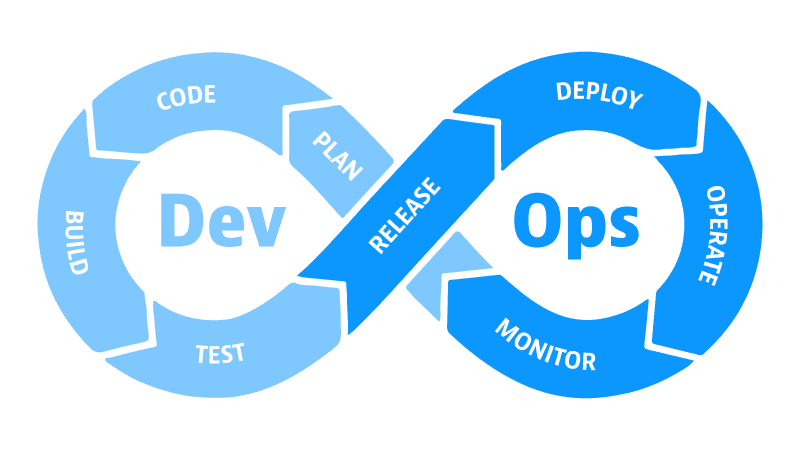
DevOps emerged as a response to a real dysfunction: development teams optimized for speed while operations teams optimized for stability. The result was a wall. Code got thrown over it, problems bounced back over it, and everyone blamed each other.
DevOps tears down that wall. It aligns incentives so that the team that writes the code also owns its behavior in production. You build it, you run it. That's the core contract.
What it doesn't mean is: "developers do everything and ops disappears." Platform engineering, SRE, and infrastructure specialization still matter enormously. What changes is the *shared ownership* of reliability.
The Five Pillars of a Mature DevOps Practice
1. CI/CD: The Heartbeat of Your Delivery Pipeline
A well-designed CI/CD pipeline is the single highest-leverage investment a team can make. Every commit should trigger an automated sequence that builds, tests, and validates your code before a human ever reviews it.
Continuous Integration means your main branch is always in a deployable state. Feature branches are short-lived (hours, not weeks), merge conflicts are rare, and your test suite is fast enough that developers don't skip it.
Continuous Delivery means every passing build is a release candidate. Deploying to production becomes a business decision, not a technical event. You remove the ceremony, the fear, and the "deployment windows" that create artificial scarcity.
In practice, this means:
- Automated test pyramids: unit tests at the base (fast, many), integration tests in the middle (slower, fewer), and end-to-end tests at the top (slowest, fewest but most critical)
- Build caching to keep pipelines under five minutes
- Parallelized test runs using tools like GitHub Actions matrix strategies or Nx affected
- Deployment gates that block a release on failed health checks, error rate spikes, or latency regressions
The goal is not to deploy more often for its own sake. It's to make deploying so boring, so safe, and so reversible that it stops being a source of stress.
2. Infrastructure as Code: Treating Your Infrastructure Like Software
If you can't reproduce your infrastructure from a Git repository, you don't own your infrastructure — it owns you.
Infrastructure as Code (IaC) applies software engineering principles — versioning, review, testing, automation — to the configuration of servers, networks, databases, and services. Tools like Terraform, Pulumi, AWS CDK, and Ansible let you describe your desired state declaratively and let the tool figure out how to get there.
The real benefits aren't just reproducibility. They're:
- Auditability: every infrastructure change is a pull request with a diff, a reviewer, and a commit hash
- Disaster recovery: spinning up a new environment is a
terraform applyaway, not a multi-day manual effort - Drift detection: automated scans catch when reality diverges from your declared state
- Environment parity: staging looks like production because it's generated from the same code
One pattern I've found invaluable is the module-per-service approach in Terraform: each microservice owns its infrastructure module, and changes to that service's infrastructure go through the same PR review as code changes. This keeps infrastructure changes visible to the team and eliminates the "I just clicked something in the console" problem.
3. Containerization and Orchestration: Building Consistent Execution Environments
Containers solved one of the oldest problems in software deployment: "it works on my machine." By packaging an application with all its dependencies into a portable, immutable image, you eliminate an entire class of environment-related bugs.
Docker remains the standard for building images, but the real power emerges when you orchestrate containers at scale with Kubernetes. A mature Kubernetes setup gives you:
- Declarative deployments with rollbacks that take seconds
- Horizontal pod autoscaling based on CPU, memory, or custom metrics
- Health checks and self-healing — Kubernetes will restart a failing pod before a user notices
- Namespace-based isolation for multi-tenant environments
That said, Kubernetes has a steep learning curve and significant operational overhead. For many teams, managed services (AWS ECS, Google Cloud Run, Railway, Render) offer 80% of the benefit with 20% of the complexity. Choose the right level of abstraction for your team's maturity and traffic patterns.
The golden rule: your container images should be stateless and immutable. State lives in managed databases, object storage, or caches — not in the container. This makes scaling out and recovering from failures trivially easy.
4. Observability: You Can't Fix What You Can't See
Monitoring tells you *that* something is wrong. Observability tells you *why*.
The three pillars of observability are metrics, logs, and traces — and mature teams use all three in combination.
- Metrics give you aggregate, time-series data: request rate, error rate, latency percentiles (p50, p95, p99), saturation. Tools like Prometheus + Grafana or Datadog are standard here.
- Logs give you discrete, structured events. The key word is *structured* — JSON logs with consistent fields like
request_id,user_id,service, andlevelare infinitely more queryable than raw text. OpenSearch, Loki, and Splunk are common choices. - Traces give you end-to-end visibility across distributed systems. When a request touches five microservices before returning an error, a trace shows you exactly which hop failed and where the latency is hiding. OpenTelemetry has become the industry-standard instrumentation layer, with backends like Jaeger, Tempo, or Honeycomb.
Beyond tooling, observability requires a cultural commitment: instrument your code from day one, not as an afterthought. Define SLOs (Service Level Objectives) before you ship a service. Set error budgets. Build dashboards that the on-call engineer can read in three seconds at 2am.
The question to ask for every new feature: "How will I know if this is broken in production?"
5. DevSecOps: Shifting Security Left
Security used to be a gate at the end of the release cycle. A security team would review a release, find issues, and send it back to development — weeks of delay, mountains of context switching, and developers who resented the friction.
Shifting security left means making security checks a native part of the CI/CD pipeline, not an external audit.
In practice, this looks like:
- Static Application Security Testing (SAST): tools like Semgrep, SonarQube, or GitHub's CodeQL scan your source code for common vulnerability patterns on every PR
- Software Composition Analysis (SCA): tools like Snyk or Dependabot check your dependencies for known CVEs
- Container image scanning: Trivy or Grype scan your Docker images before they're pushed to a registry
- Secrets detection: tools like GitLeaks or TruffleHog catch accidentally committed API keys and passwords
- Policy as Code: tools like Open Policy Agent (OPA) or Checkov enforce security policies on your Terraform configurations before they're applied
The goal isn't to make security perfect — it's to make security continuous, automated, and fast enough that it doesn't slow your team down.
The Mindset That Makes It All Work
All of the above is tooling and process. But the teams I've seen consistently outperform — shipping faster, recovering from incidents faster, building more reliable systems — share a set of beliefs that no tool can install.
Blame-free post-mortems. When something breaks, the question isn't "who did this?" — it's "what did our system allow to happen, and how do we make it impossible next time?" Blame creates incentives to hide problems. Psychological safety creates incentives to surface them.
Small, frequent changes. The riskiest deployment is the one with two weeks of code in it. Small changes are easier to review, easier to test, easier to roll back, and easier to understand when they cause problems. This requires discipline — keeping PRs small, avoiding long-lived feature branches, using feature flags to decouple deployment from release.
Ownership over interfaces. In a microservices world, every team owns a service and its contract with the outside world. That ownership extends to its deployment, its uptime, and its on-call rotation. Teams that own what they build move faster because they understand the consequences of their decisions.
Continuous improvement over heroics. The engineer who stays up all night to fix a critical outage is not a hero — they're a symptom. A mature DevOps culture asks: why did we need a hero? What runbook didn't exist? What alert didn't fire? What test didn't catch this? The answer always leads to a process improvement, not a performance review.
Practical Starting Points
If you're building a DevOps practice from scratch or maturing an existing one, here's where I'd focus energy:
1. Get your CI pipeline green and fast. Nothing else matters until tests run reliably and quickly on every commit.
2. Codify your infrastructure. Start with one service, one environment, one Terraform module. The habit of "infra in Git" is more important than the specific tool.
3. Instrument one service end-to-end. Add structured logging, expose a /metrics endpoint, add trace context headers. Experience the difference observability makes before rolling it out everywhere.
4. Write your first runbook. For your most common operational task — restarting a service, scaling up a database, responding to a high-error-rate alert. Make it a living document.
5. Hold your first blameless post-mortem. Even for a small incident. Establish the culture early.
Closing Thoughts
DevOps is one of those disciplines where the gap between "doing it" and "doing it well" is enormous — and the gap between "doing it well" and "doing it excellently" is where the real competitive advantage lives.
The teams that ship reliably, recover quickly, and improve continuously aren't using magic tooling. They've internalized the feedback loop: build, measure, learn, improve. They've made deploying safe. They've made failures survivable. And they've built a culture where every engineer feels responsible for the full lifecycle of the software they write.
That's the real promise of DevOps. Not the tools. The culture.
*If this resonated with you, I'd love to hear how your team approaches CI/CD, observability, or incident management. Drop a comment or reach out — these conversations are how we all get better.*